
There’s been a lot of hype over CCD sensors these last few years. Young photographers are discovering the joy of old compact cameras and the supposed organic rendition that CCD sensors offer compared to more modern, clinical CMOS cameras. For many of us older photographers who owned CCD-sensor cameras back in the day, we’re left wondering why you would obsess over old tech that performs poorly in low light and produces only 10MB images. Many go as far as to say that the claims are nonsense.
A Poor Man’s Ricoh GRIV
Setting the hyperbole aside for a moment, I continue my quest to find a pocketable camera* on a budget. I’d like a small camera that can take good JPGs and RAW photos, with a built-in flash and an EVF as a bonus. I want something I can take on dog walks that slips into my pocket without me noticing. Something I can grab and operate with one hand. A Ricoh GRIV would be ideal, except that it doesn’t tick the budget criteria. Neither does it have an EVF, which I’ll come on to in a moment. Currently, I’ve been choosing my Panasonic Lumix GM5. Being micro four-thirds, I have a ton of lenses I alternate between. Right now, I have the 12-32mm 3.5-5.6, a tiny zoom that punches well above its weight, but I’m just as likely to chuck on the Panasonic 14mm for a bit of street or landscape.
*Side note: I take issue with certain camera models being referred to as ‘compact’. Perhaps I misunderstand the term, but the Fujifilm XE – X100 series or Sony A6XXX series, for example, are by no means compact, relatively speaking. If you have to wear the camera around your neck or wrist because it won’t fit in a pocket, it is not compact. This is just my opinion, and maybe it’s a hang-up from using small 35mm cameras, but I do find the term ‘compact’ misleading.
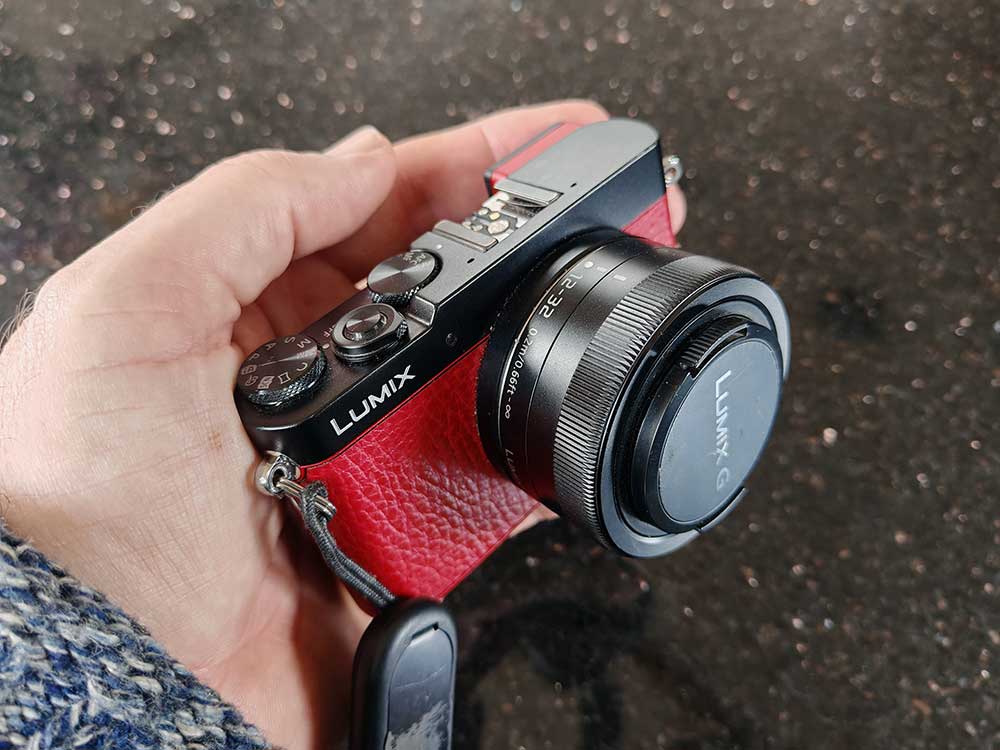
I love this set-up, even more so because Panasonic managed to pack an EVF into its tiny body. Thing is, with a camera this small and for the purposes I use it for, I find I don’t actually use the EVF that much. This surprises even me. I’ve always avoided cameras without an EVF, yet I often catch myself lining up a shot with the back screen alone. Don’t get me wrong, when I’m shooting street or travel with a full-frame, I’m almost always using the EVF, but that’s a different camera for a different purpose. That’s for when I’m in “I’m going out for a whole afternoon just to take photographs” mode. My pocketable camera is used differently. It’s there to address the adage “the best camera is the one you have on you”. And often, if I’m wearing a light jacket, even the GM5 adds a bit of weight. When my pockets are stuffed with dog treats, poo bags, keys and a phone, I’m always aware that I have a small, albeit weighty, ILC swinging about my person.
Your Phone Takes Better Photos
Sure, a phone can capture larger images and apply lots of lovely computational magic to them, but we all know that taking photos with a phone is a different experience from using a dedicated camera. That’s a habit I can never break: using a camera makes me feel more connected, whether it’s an interchangeable monster or a tiny compact. I just like using cameras and the control that they offer. And I’m realising that, perhaps because of phone photography, I’ve got used to not having an EVF. The Canon S95 doesn’t have one, by the way, but unlike my GM5, it does have a built-in flash.
The Canon S95 Is Tiny
Just take a look at the size of the S95 compared to the GM5.
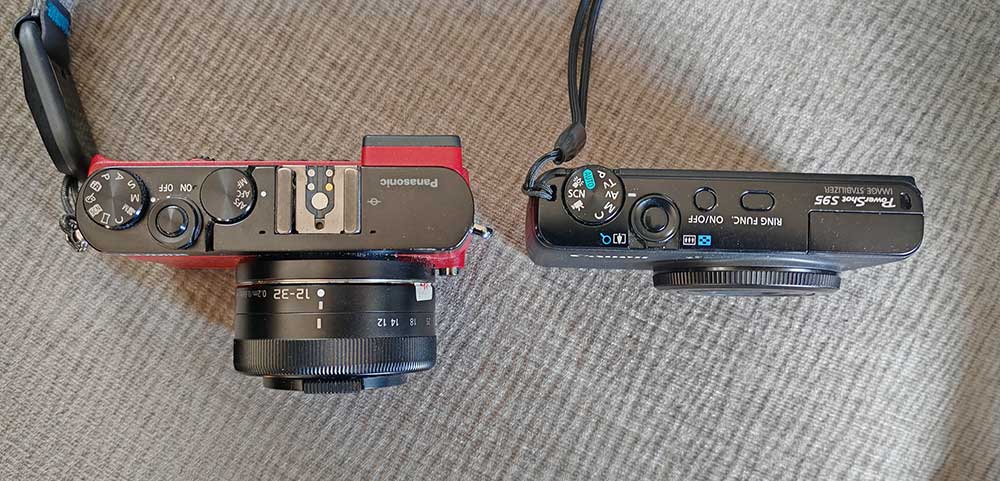
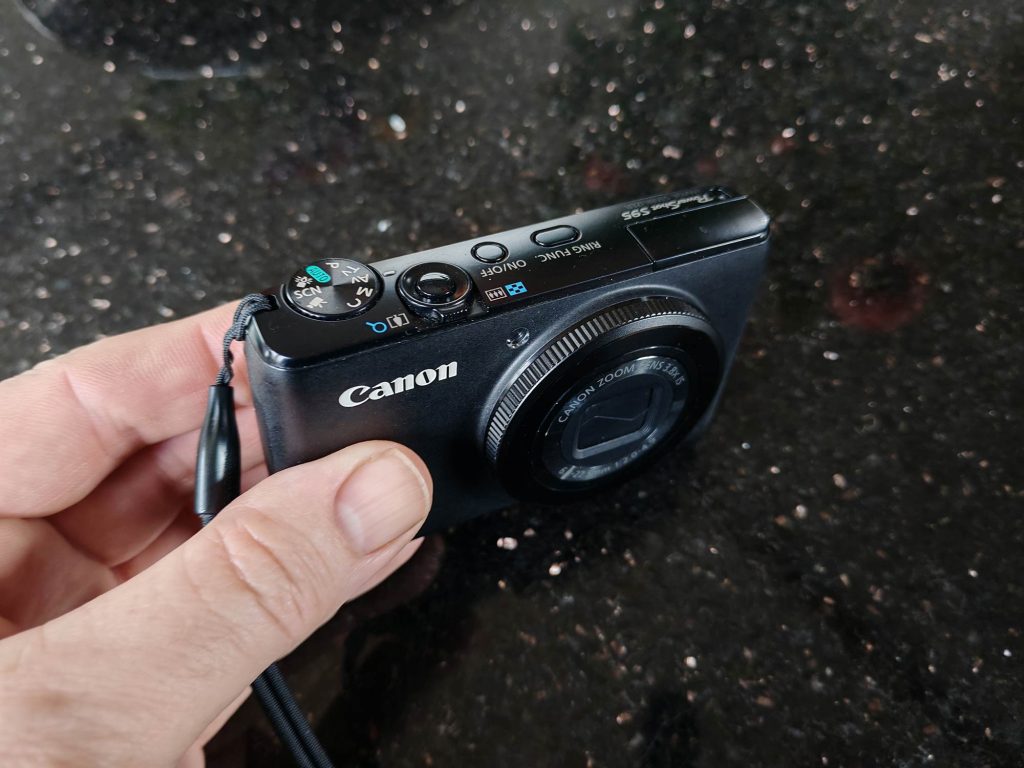
The comparison is purely about size at this point. They are two different beasts and not directly comparable for obvious reasons, but for my sake, the S95 can slip into my jeans pocket without me noticing. That’s exactly what I wanted. Sure, I could have grabbed the Panasonic TZ300, but that currently retails at £869, and you’d be hard-pushed to find a decent second-hand TZ200 at less than £550. Having done some cursory research, I came across the Canon S95. It is heralded as still holding up, 16 years after its initial launch in 2010, with a tack-sharp lens and lovely rendering. The only downside to the S95 is that in 2026, it is a desirable compact, and prices have risen. Unless you stumble upon one in a charity shop, you’ll pay upwards of £100, with a flawless copy going for £250 or more. Pretty ridiculous prices for an old compact. Or are they? With tech getting more expensive, maybe there is something to be said about paying good money for an old camera that still performs well…
Canon S95 Performance
I took the S95 out for one afternoon, just to grab some snaps under different conditions. I didn’t give much thought to the settings to begin with. All of these images are JPEGs, straight out of the camera. No editing or cropping.

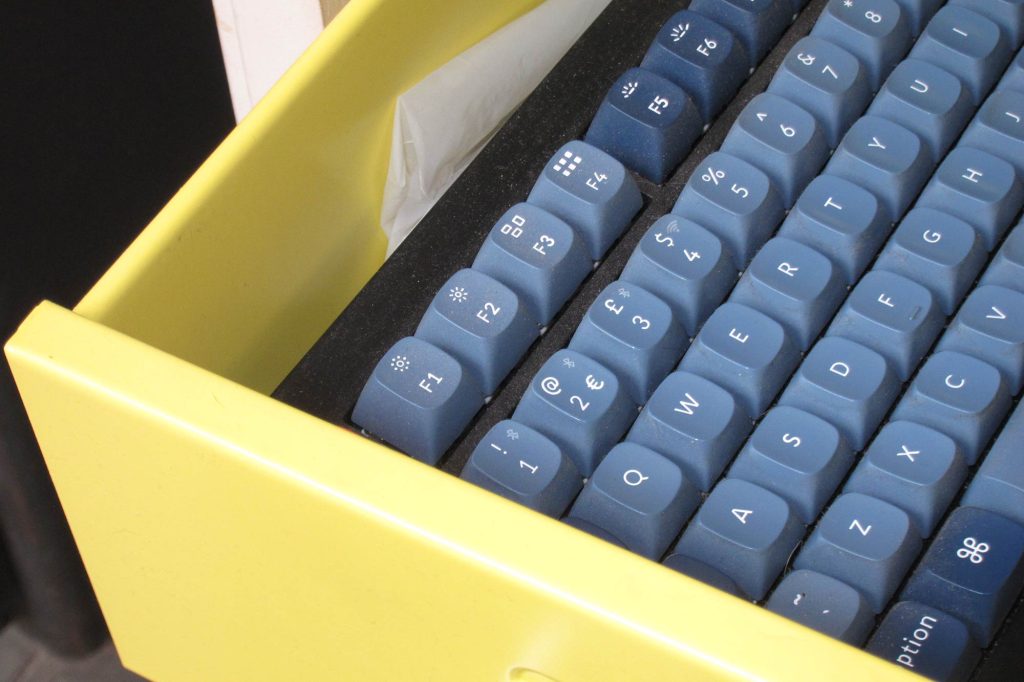

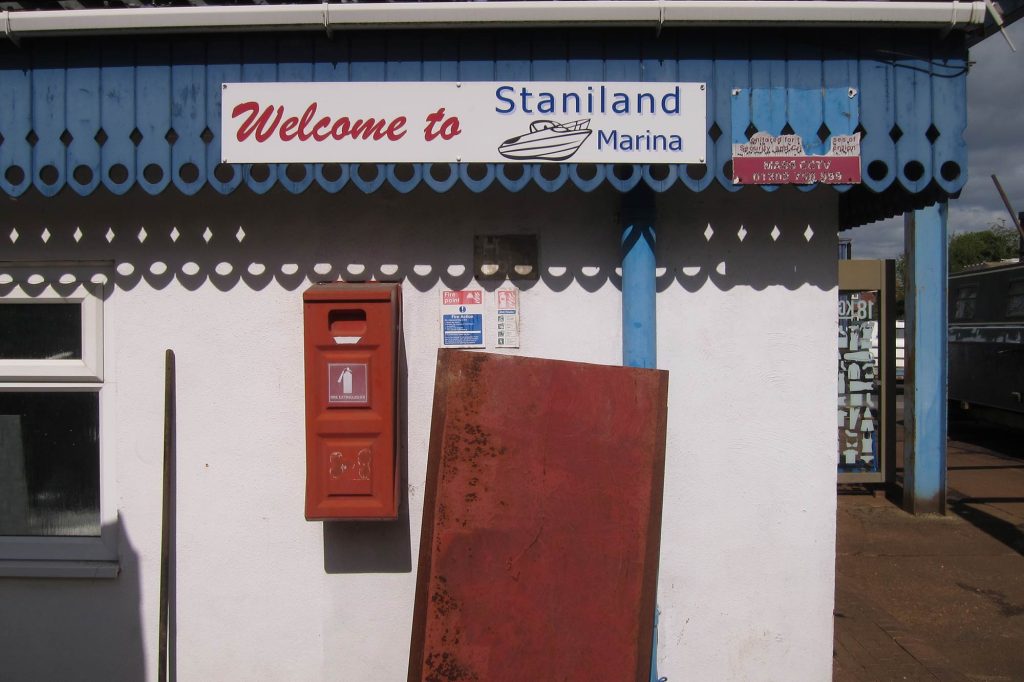

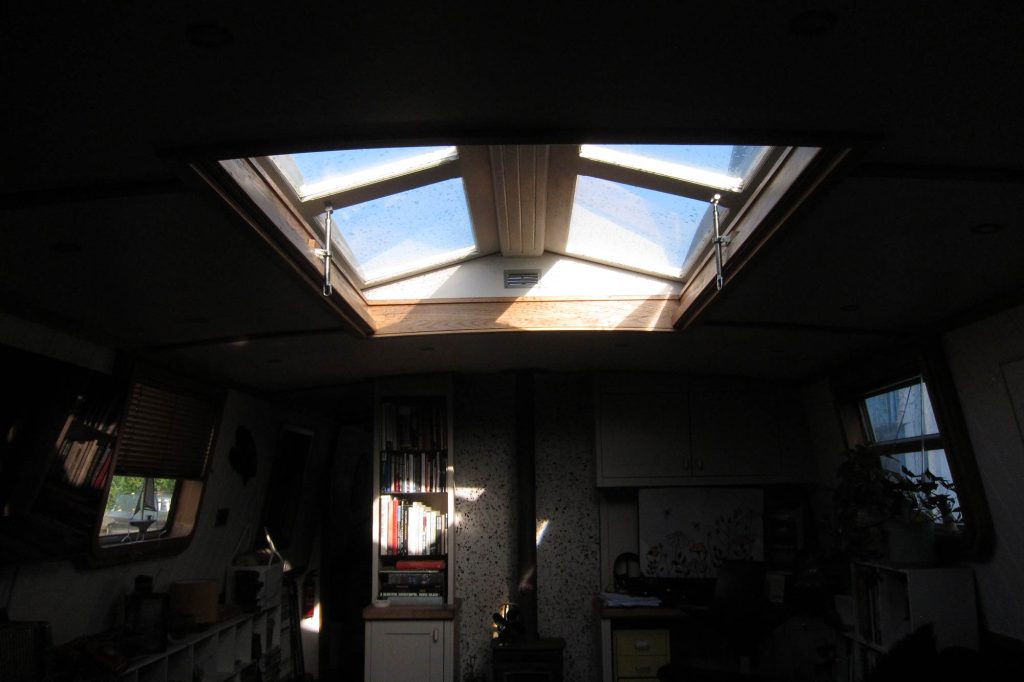
What you are viewing here are compressed images, reduced to 2,000px at only 45% quality, but they hold up pretty well with minimal chromatic aberration. Knowing that CCD sensors work best in good light, I pushed it a bit with a few low-light shots and was happy to see that dark areas are not too mushy.

JPG vs RAW
This was never supposed to be a full technical review, but I couldn’t resist tinkering with a raw file. Honestly, I’m actually impressed. Here is a shot I took of a boat in a dark shed, being careful not to blow out the highlights. I used the flash to catch the front of the boat. Just. On the left is the original JPG, and on the right is the raw version.
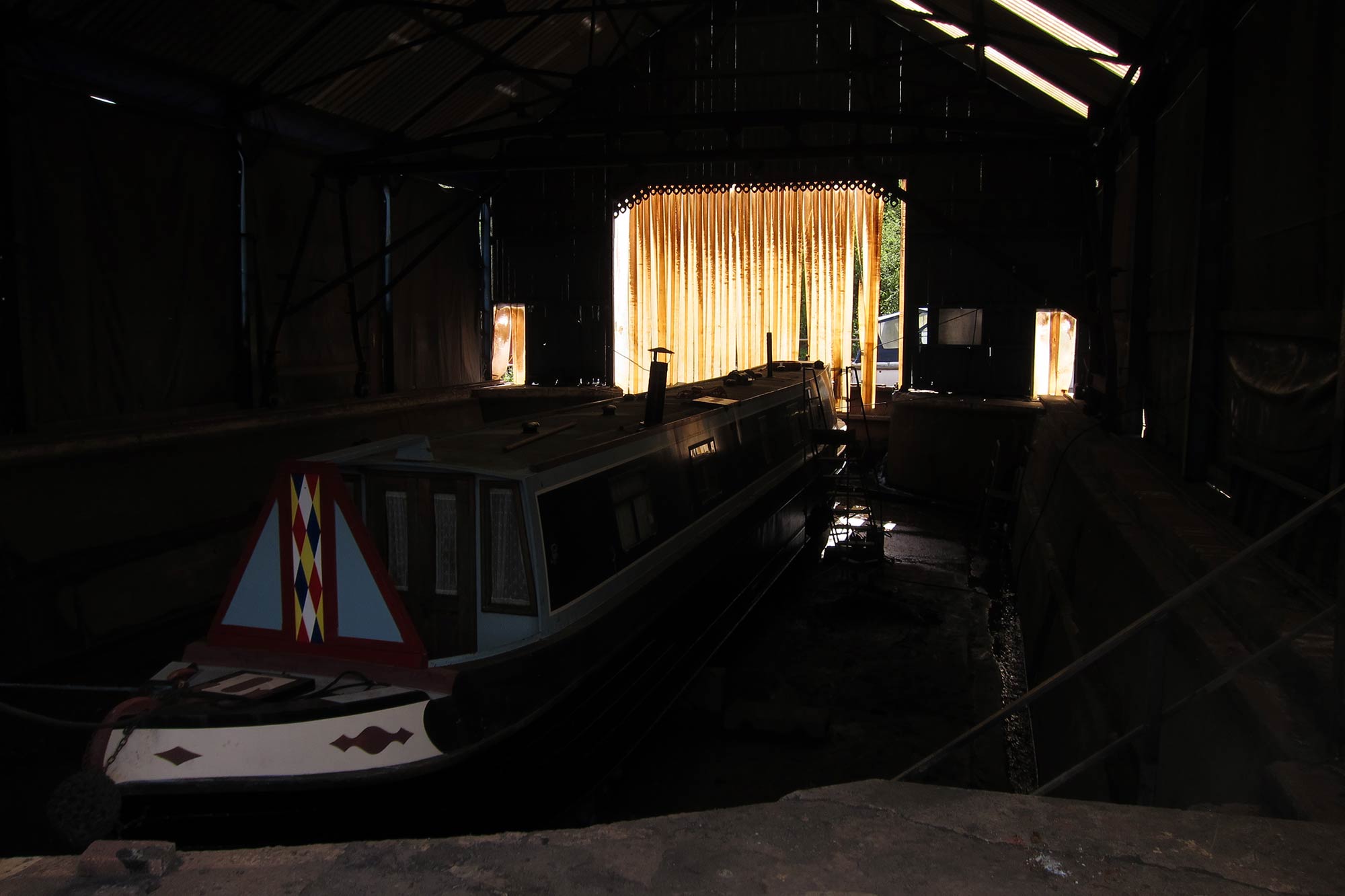
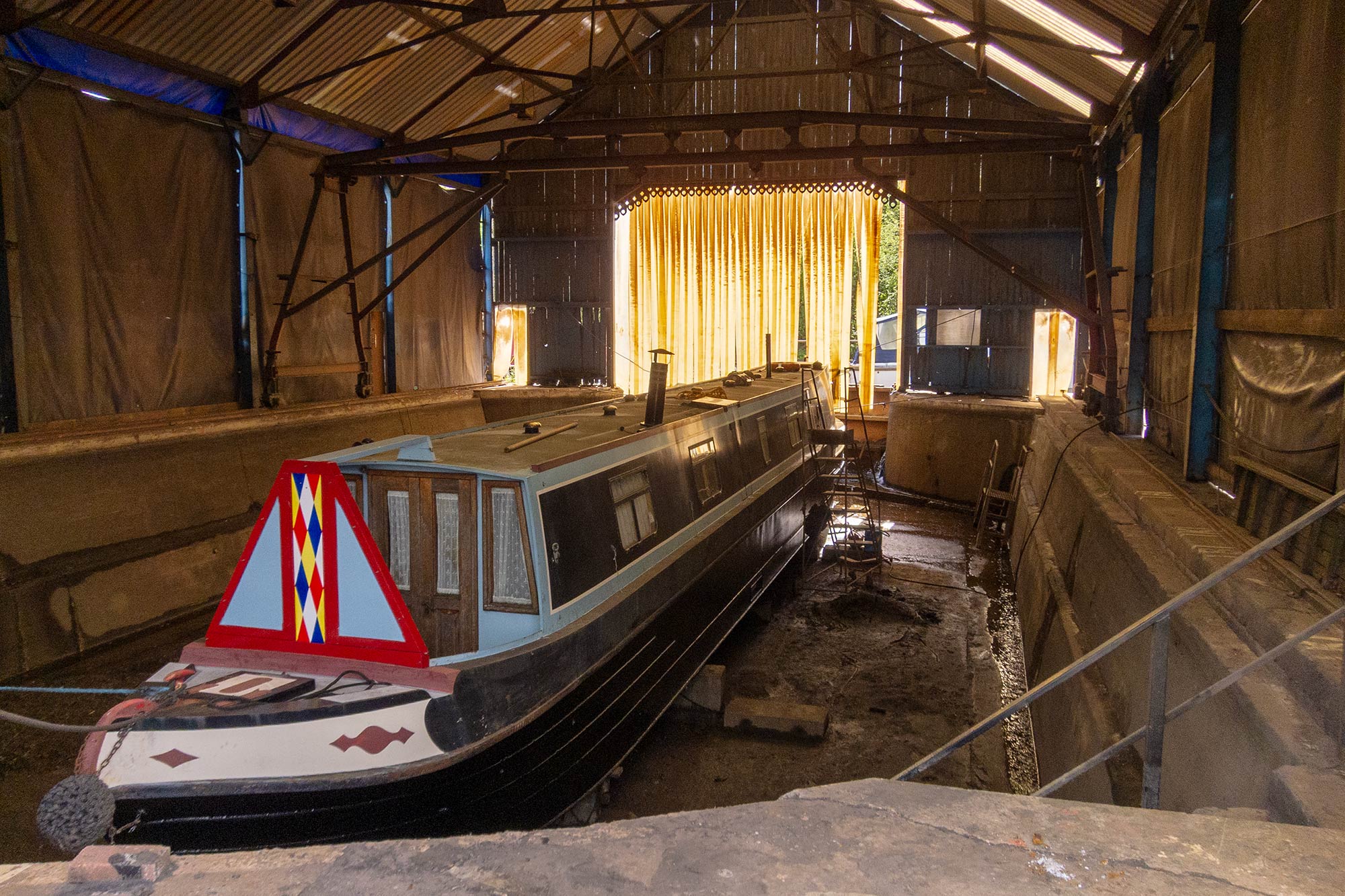
No noise reduction was applied. ISO was 640, and I under-exposed by -1.33. The RAW file was pushed to +2.70. Click on either image to view the 2,000px version.
Flash
I’ve only used the flash a couple of times so far, so it’s difficult to tell how it copes in the real-world. I suspect it’ll be pretty underpowered for street photography, but it’s good for close-up detail.


Is The Canon S95 Any Good?
The Canon S95 is one of those pieces of engineering whose appearance hides its capabilities. In that respect, it is similar to the GM5, except I can slip this into my jeans pocket without knowing it’s there. That’s the point of a camera this small. The images are coming in at 3,648px along the longest length, but unless I crop, I don’t see this as an issue. I tend not to crop my photos anyway, and it’s rare that I print them larger than A4. I’ve seen photos taken by an S95 printed at A3 size, and they look great. This is in part due to that excellent 28-105mm equivalent lens, which more than makes up for the tiny 1/1.7″ sensor. And, if you keep ISO low, there’s a lot of scope in the raw files. In short, this is a tiny powerhouse, despite its age.

Does it have that CCD magic? In a certain light, yes. Take the leading image of the oranges, the first sample shot of the building with blue sky, or the keyboard photograph. There is a painterly look to them that feels organic. They remind me of my Canon 5Dii, released two years before the S95. I’ve been reviewing some of my older photos taken with that camera, and there is a look to Canon images of this period that I am not getting with my more modern cameras. Nothing that a bit of post can’t sort out, but it’s nice to get this look in-camera. The magic won’t work every time, though. As with everything in photography, you have to choose your subject with the right light.
Is all this reason enough to pay good money for old tech? If you just want a camera to play around with, maybe not, but one could argue that this 16-year-old, 10MB compact still delivers. Even by today’s standards, this feature-rich compact is not a toy. I can see myself pocketing this camera over my GM5, knowing that if the situation is right, it’ll deliver pleasing results. It’s never meant to replace other, more capable camera systems I own, but the fact that I don’t even notice it in my trouser pocket pleases me.